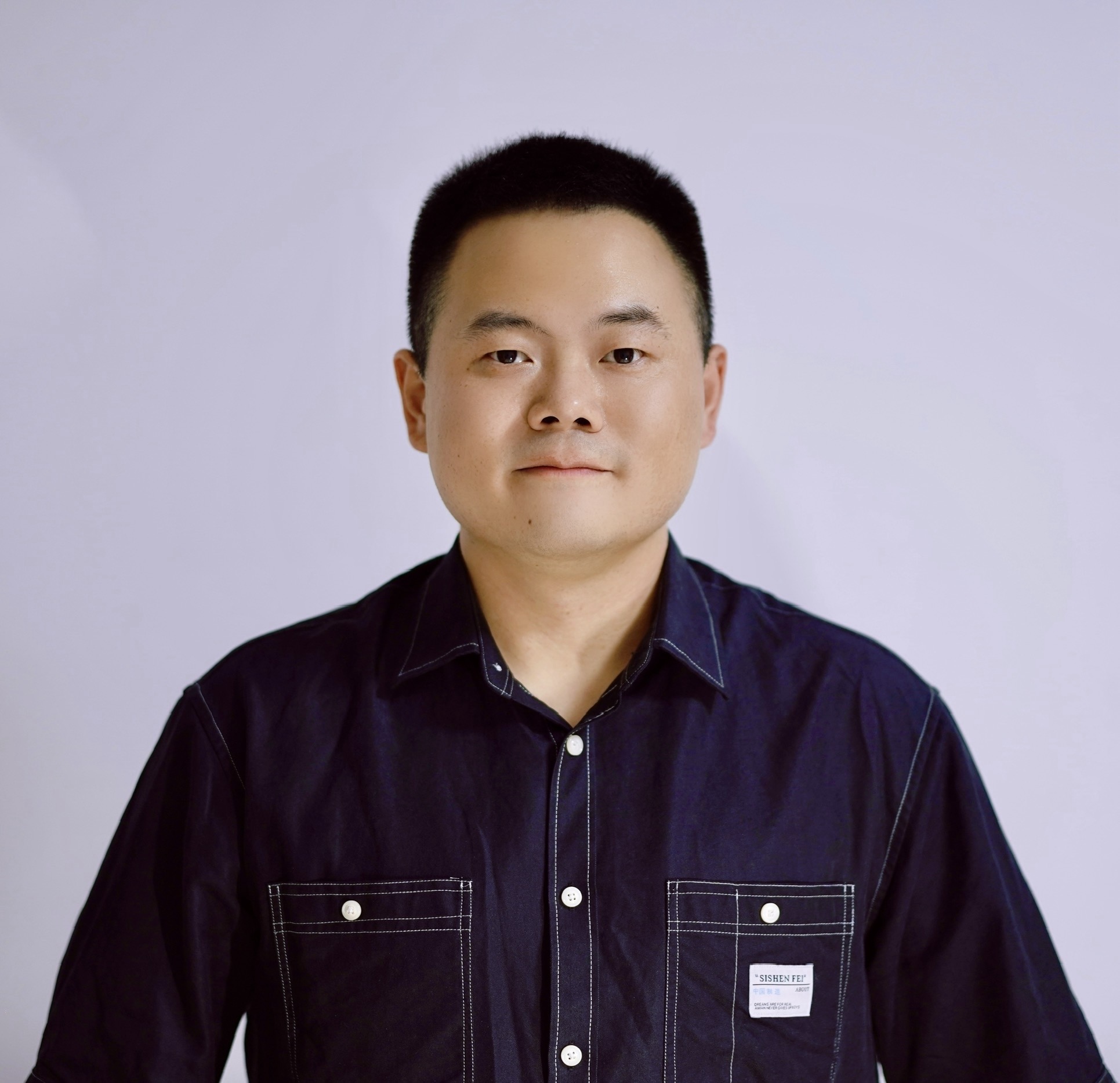
About
I am Ji Guan, an Associate Professor at the Institute of Software, Chinese Academy of Sciences. In 2014, I received my bachelor’s degree in computational mathematics from Sichuan University, China, and then obtained my Ph.D. degree in quantum computing supervised by Prof. Mingsheng Ying and Prof. Yuan Feng from Centre for Quantum Software and Information of University of Technology Sydney, Australia in 2018.
I am leading the group of FM4QC, Formal Methods for Quantum Computing. My research focuses on systematically addressing the security, privacy, and reliability of quantum algorithms, programs, and hardware systems by developing formal method theories, algorithms, and tools. By extending formal methods to the quantum domain, I aim to ensure that quantum systems operate reliably, securely, and efficiently.
Latest News
Showing updates from January 2026 onward. Older items are archived on the News page.
I have been invited to serve as a PC member for CAV 2027.
I have been invited to serve as a TPC member for QCNC 2027.
Our paper "Certifying Adversarial Robustness of Quantum Classifiers under Known-Readout Query Access" has been accepted to ACM CCS 2026. The preprint is now available on arXiv; the proceedings version is forthcoming.
I have been invited to serve as a TPC member for IEEE ICC 2027.
I have been nominated to serve as an Area Chair for the AI for Science Workshop at NeurIPS 2026.
I have been invited as a speaker to the Quantum Theory and Operator Theory (QTOT) Satellite Conference, part of the International Congress of Basic Sciences (ICBS), in Huairou, Beijing, August 24-28, 2026.
Our CAV 2026 papers "Formal Verification of Quantum Ancilla Safety" and "Model Checking Matrix Product States Against Linear Chain Logic" have been officially published in the proceedings. Ancilla Safety · MPS Model Checking
I have been invited to serve as a Program Committee Member for USENIX Security 2027, which will take place in Denver, CO, USA, on August 11-13, 2027.
Our paper "Hamiltonian-Informed Point Group Symmetry-Respecting Ansätze for the Variational Quantum Eigensolver" has been published online in Journal of Chemical Theory and Computation. DOI · arXiv
I have been invited to serve as a Program Committee Member for SETSS 2026, the International School on Engineering Trustworthy Software Systems.
Our paper "QSeqSim: A Symbolic Simulator for Qiskit While Loops Using Sequential Quantum Circuits" has been published in the FM 2026 proceedings. DOI · arXiv · PDF
Our paper "Constructing Compact ADAPT Unitary Coupled-Cluster Ansatz with Parameter-Based Criterion" has been published online in Journal of Chemical Theory and Computation. DOI · arXiv
I have been invited to serve as an Area Chair for the AI for Science Workshop at ICML 2026.
I have been invited to serve as a PC member for IEEE Quantum Week 2026.
Our contributed chapter has been officially published in Springer’s Quantum Robustness in Artificial Intelligence. Chapter PDF
Our paper "Experimental robustness benchmark of quantum neural network on a superconducting quantum processor" has been accepted at SCIENCE CHINA Physics, Mechanics & Astronomy.
Our paper "Lin-search: Scaling Exact Synthesis of CNOT Circuits via Hybrid Iterative Deepening Search" has been accepted at DAC 2026.
Our paper "A quantum game designed for property partitioning with implementation on superconducting quantum processors" has been accepted at Theoretical Computer Science.
Awarded Chinese Academy of Sciences “Future Partner Network” Grant for international collaboration and exchange, jointly with A/Prof. Alfons Laarman.
Join Our Team
We are recruiting Master’s and Ph.D. students, postdoctoral researchers, research interns, and research/software engineers interested in the intersection of quantum computing and formal methods. Current topics include:
- Model checking and verification of quantum systems
- Quantum privacy protection mechanisms
- Trustworthy quantum machine learning
Learn more about research directions, support, and how to apply.
Awards and Honors
- 2024 Young Elite Scientists Sponsorship Program (中国科协青年人才托举工程), China Association for Science and Technology
Recommended by China Computer Federation (CCF), only 5 scholars. - 2023 Beijing High-Level Overseas Talent Program (Top 30 people)
Recognized for outstanding contributions in the field of quantum computing and formal methods. - 2023 ISCAS Outstanding Youth Award
Awarded by the Institute of Software, Chinese Academy of Sciences. - 2022 Youth Innovation Promotion Association Membership (CAS)
Acknowledging innovative achievements in quantum system verification and trustworthy quantum machine learning. - 2014-2018 UTS ARC Discovery Scholarship
Awarded during Ph.D. study at the University of Technology Sydney. - 2018 UTS FEIT PhD Post-Thesis Publication Scholarship
Recognized for exceptional research contributions post-thesis submission of the University of Technology Sydney.
Selected Publications
Li, J., Mei, J., Fang, W., and Guan, J. (2026).
Formal Verification of Quantum Ancilla Safety.
CAV 2026.
Paper · DOI · arXiv · PDF · Artifact · GitHubXu, M., Chen, Y., and Guan, J. (2026).
Model Checking Matrix Product States Against Linear Chain Logic.
CAV 2026.
Paper · DOI · arXiv · PDF · Artifact · GitHubGuan, J., Feng, Y., Turrini, A., and Ying, M. (2024).
Measurement-based Verification of Quantum Markov Chains.
CAV 2024.
Paper · DOI · arXivGuan, J., Fang, W., and Ying, M. (2022).
Verifying Fairness in Quantum Machine Learning.
CAV 2022
Paper · DOI · arXivGuan, J., Fang, W., and Ying, M. (2021).
Robustness Verification of Quantum Classifiers.
CAV 2021
Paper · DOI · arXivGuan, J., and Huang, M. (2026).
Certifying Adversarial Robustness of Quantum Classifiers under Known-Readout Query Access.
ACM CCS 2026. Accepted; proceedings forthcoming.
arXivGuan, J. (2025).
Optimal Mechanisms for Quantum Local Differential Privacy.
ACM CCS 2025.
Paper · DOI · arXivGuan, J., Fang, W., Huang, M., and Ying, M. (2023).
Detecting Violations of Differential Privacy for Quantum Algorithms.
ACM CCS 2023.
Paper · DOI · arXiv
Service
I contribute to the research community through program committee work, area chair service, editorial service, and peer review.
Program Committee Member
- CAV 2025 / CAV 2026 / CAV 2027 - International Conference on Computer Aided Verification
- USENIX Security 2027 - USENIX Security Symposium
- QCNC 2025 / QCNC 2026 / QCNC 2027 - International Conference on Quantum Communications, Networking, and Computing
- IEEE ICC 2026 / IEEE ICC 2027 - IEEE International Conference on Communications
- IEEE Quantum Week 2026 - IEEE International Conference on Quantum Computing and Engineering
- SETSS 2025 / SETSS 2026 - International School on Engineering Trustworthy Software Systems
- ChinaSoft 2025 - China National Software Conference
Area Chair
- AI for Science Workshop at NeurIPS 2026 - Verification in the Age of AI Scientists
- AI for Science Workshop at ICML 2026 - AI Scientists: Tools, Co-authors, or Founders?
Editorial Board Member
- Theoretical Computer Science Section, Frontiers in Computer Science
Reviewer
I have served as a reviewer for several top-tier journals and conferences, including:
ASPLOS 2025, CDC 2024, QIP2024, CSL 2024, AQIS 2023, CAV 2021, IEEE QCE 2022, 2023 and 2024, PLanQC 2021, QPL 2020, COCOON 2018 and 2019, ICFEM 2019, SIAM Journal on Control and Optimization, the Science Bulletin, Journal of Computer Science and Technology, Information Processing Letters, IEEE Transactions on Emerging Topics in Computational Intelligence
Team
Ph.D. Students
- Zihao Li
- Chenjian Li
- Travis Han Yuen Lam
Master’s Students
- Jiqi Li
- Kehan Li
- Jiaxuan Li
- Zhengyang Zhou
- Yecheng Qin
- Yi Zhan
Graduates
- Mingyu Huang, R&D Engineer, Arclight Quantum (北京中科弧光量子软件技术有限公司)
Interns
- Yanling Lin
Visiting Scholars
- Peng Yan, Nanjing University of Posts and Telecommunications
- Jingyi Mei, Leiden University, the Netherlands
- Wang Fang, University of Edinburgh, UK
- Ningning Chen, University of Shanghai for Science and Technology
Funding Support
As a Principal Investigator, I have secured competitive research grants from:
- National Natural Science Foundation of China (NSFC)
- Chinese Academy of Sciences (CAS)
- Beijing Municipal Government
- Institute of Software, Chinese Academy of Sciences
Global Visitors
Country distribution and pageviews for this homepage.
Click the map to open the full visitor details page.